1) Nitrogen Immobilization
Nitrogen immobilization is the process by which soil microorganisms take up inorganic nitrogen (mainly NH₄⁺ and NO₃⁻) from the soil solution and convert it into organic forms inside their own cells. In other words, the N is temporarily “locked up” in microbial cells and is not available for plants.
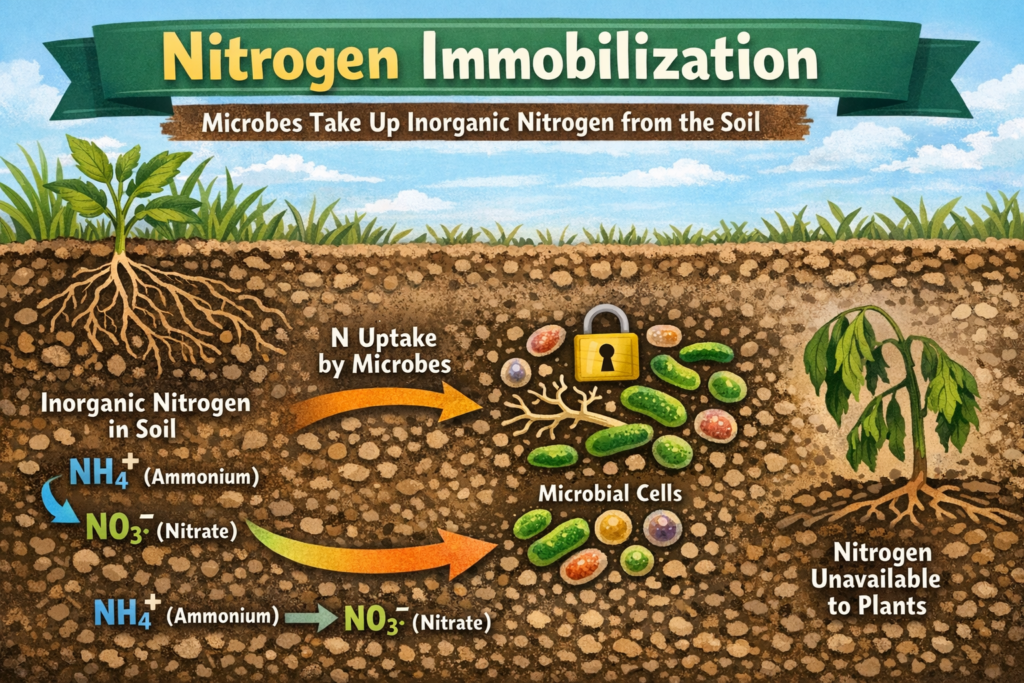
Microbes need nitrogen to build proteins, enzymes, and DNA. When residues with high carbon-to-nitrogen (C:N) ratios (e.g., straw) are added to soil, microbes require extra N to decompose them, which menas they “steal” available inorganic N from the soil. This nitrogen becomes temporarily unavailable to plants. Important thing is immobilization is not a loss of N — it is temporary storage in microbial biomass. Simple way to think like that plants and microbes compete for nitrogen and when microbes win, nitrogen is immobilized.
1.1) Nitrogen starvation
When residues with a high carbon-to-nitrogen (C:N) ratio are added to soil (e.g., straw, corn stover), microbes need extra nitrogen to break down all that carbon They take NH₄⁺ and NO₃⁻ from the soil and nitrogen becomes immobilized in microbial biomass. Plants are left N-deficie. This results in temporary nitrogen starvation of crops.
However, high C:N is not the only cause. Nitrogen starvation can also occur due to low total soil nitrogen, leaching losses, denitrification, cold soils, poor root activity, etc.,
- ✔ High C:N ratio → microbial immobilization → nitrogen starvation
- ✔ But N starvation can also occur without high C:N
Nitrogen starvation often occurs when microbes outcompete plants for nitrogen, especially after adding high C:N organic materials.
2) Nitrogen Mineralization
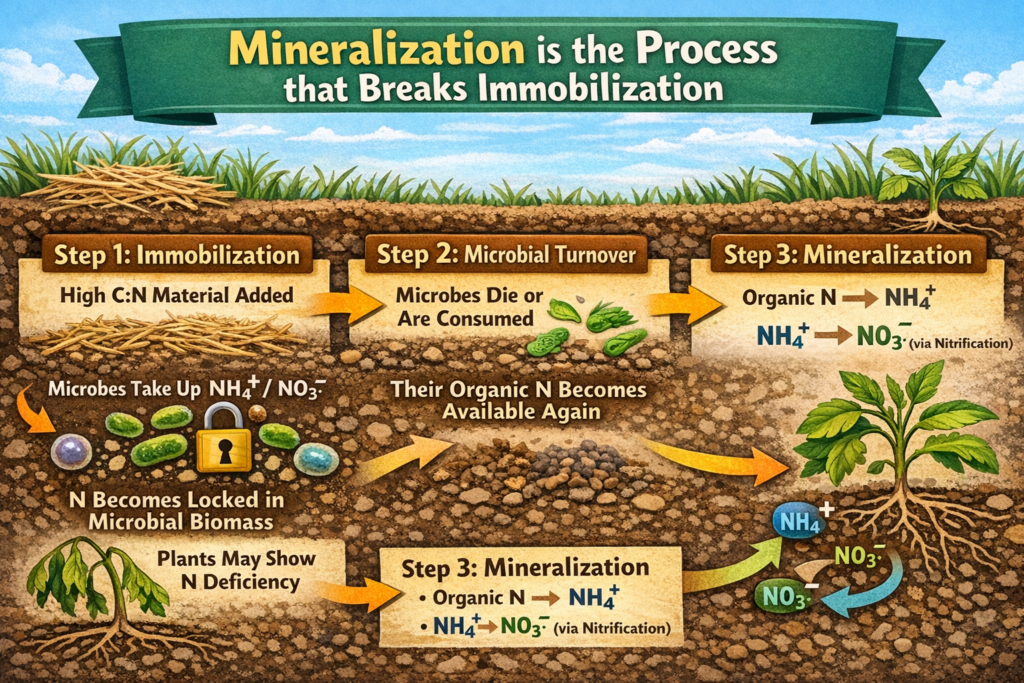
Mineralization is the biological process by which soil microorganisms convert organic nitrogen into inorganic, plant-available forms, mainly Ammonium (NH₄⁺) (and later, via nitrification → nitrate, NO₃⁻). This is the opposite of immobilization.
Mineralization occurs when microbes have more nitrogen than they need for growth, usually under low C:N ratio residues (legume residues, manure, compost, microbial biomass). Microbes do not need extra N and excess will be released. Therefore, mineralization is the process that breaks immobilization